



The time when CRM was merely a “storage place” for employees to input customer names and phone numbers for formality is over. Entering 2026, the boundary between a business achieving breakthrough growth and one that is standing still lies in the ability to: Understand and act based on data.
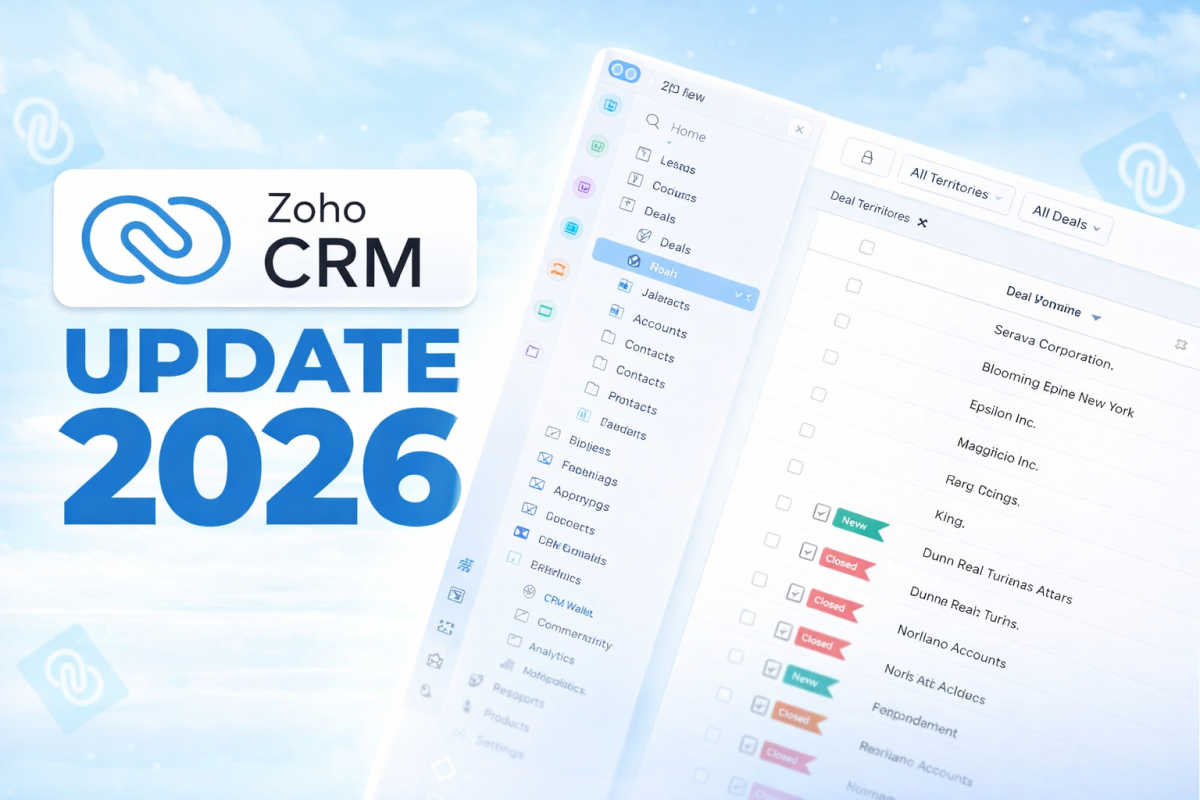
The Zoho CRM 2026 version is not just a regular feature update. It marks a historical transformation: CRM is no longer a storage system, but officially becomes the “operational brain” coordinating all your sales, marketing, and customer service activities.
Together with WBL Consulting Group, let’s review the “game-changing” updates that your business needs to know today.
1. AI Zia in Zoho CRM 2026: When the assistant no longer “reminds” but starts to “lead”
Previously, AI Zia in CRM systems mainly played a basic supporting role, such as suggesting email sending times or providing simple data analysis. However, in the 2026 version, Zia has developed into an operational layer across the entire system.
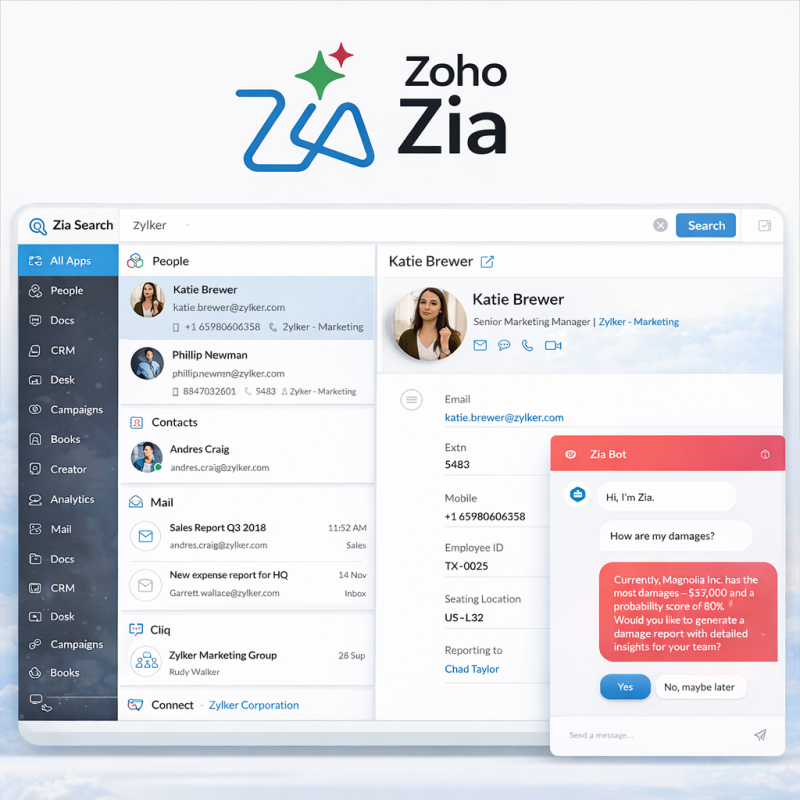
• Not only stopping at analyzing historical data, Zia can learn directly from the real behaviors of the sales team. This allows the system to build highly accurate predictive models, helping businesses evaluate customer potential more clearly.
• In addition, instead of letting the sales team determine the next step when working with customers, the system can proactively suggest appropriate actions at each point in time. These suggestions are based on real data and the specific context of each business opportunity, helping increase conversion rates and optimize performance.
From a system that records and stores information, Zoho CRM 2026 is shifting into a decision-support platform, where data is not only stored but also leveraged to create real value for businesses.
2. Integrating all interactions into a unified touchpoint (Omnichannel)
One of the biggest challenges businesses face today is that customer data is scattered across multiple channels. The sales team uses Zalo, marketing operates via email, while customer service handles hotline requests. This fragmentation disrupts and creates inconsistency in the customer experience.
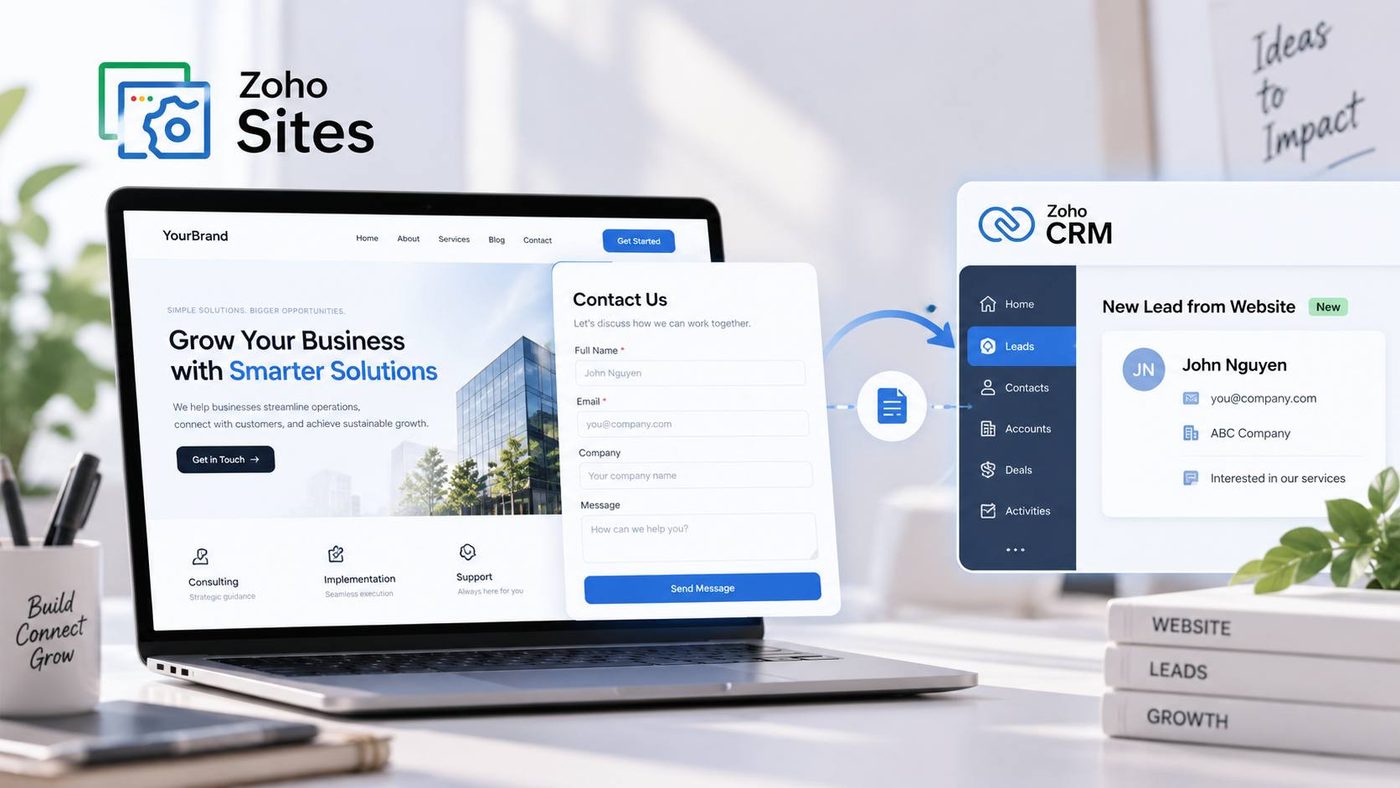
In this context, data integration becomes a core requirement. With modern CRM platforms like Zoho CRM 2026, all interactions from websites, social media, email to call centers can be centralized into a single system. Each customer will have a continuous interaction timeline, fully reflecting their working history with the business.
This approach in Zoho CRM 2026 helps operational teams gain a comprehensive view of customers, thereby providing more accurate, seamless, and professional consultation at every touchpoint.
3. Deep-level process automation, reducing dependence on manual operations
A common reality is that even after implementing CRM, many businesses still rely heavily on manual operations during their workflows. This not only reduces efficiency but also increases the risk of errors in data management and customer care.
Next-generation CRM platforms like Zoho CRM 2026 solve this problem by embedding automation into core processes:
- The system can automatically assign leads based on criteria such as region, capability, or performance of the sales team.
- At the same time, nurturing workflows can be triggered immediately when customers show interaction behaviors on the website or application.
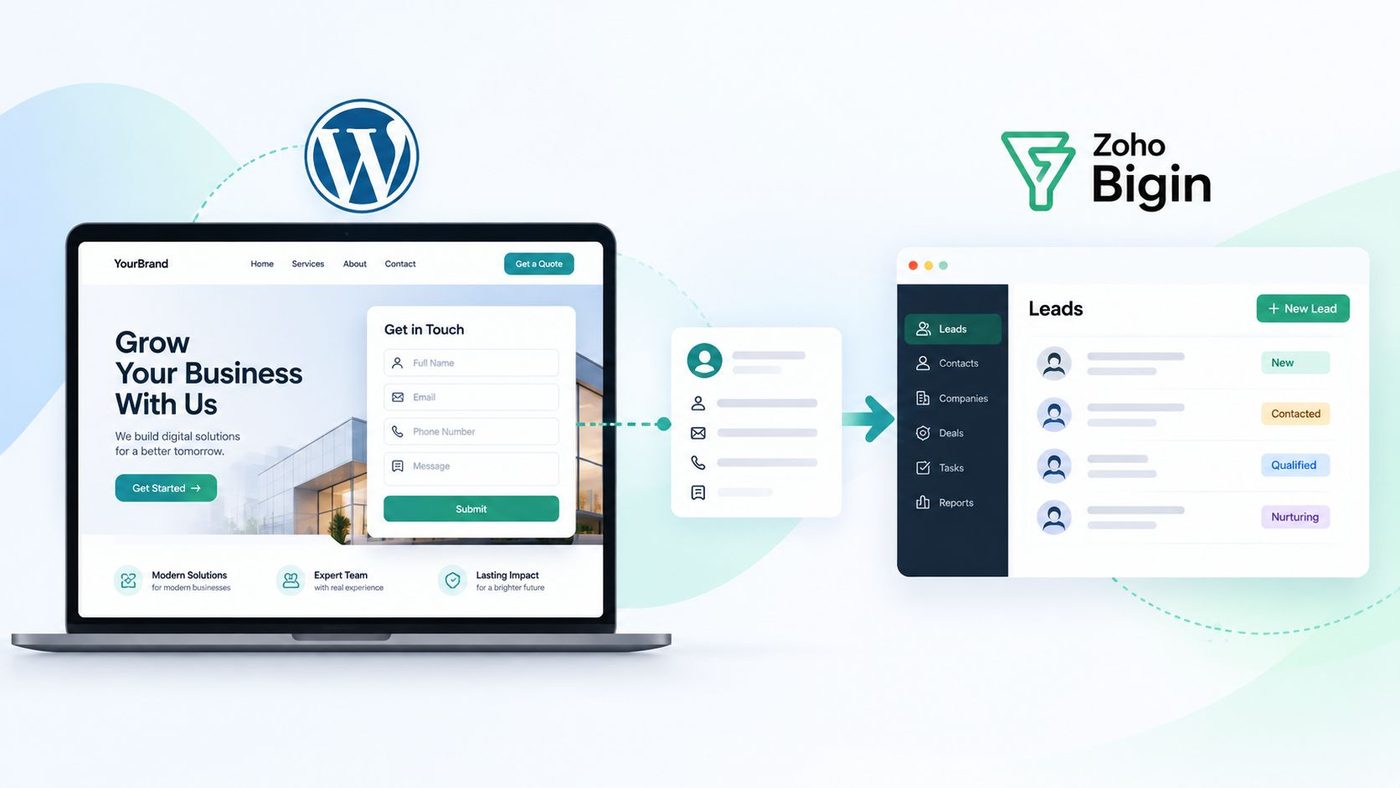
- In addition, Zoho CRM 2026 allows direct connection and synchronization of data with related systems, minimizing human intervention in processing. This not only optimizes operations but also ensures consistency and accuracy of data across the entire system.
4. Data analysis is not just for observation, but for decision-making support
In many traditional systems, reports often stop at displaying numbers, lacking the ability to translate into concrete actions. This leaves managers with data but without enough basis to make timely decisions.
Modern CRM platforms are changing this approach by focusing on insights, meaning the ability to interpret data into valuable understanding. Instead of complex tables, the system is designed to directly answer key operational questions:
Identify which marketing channels truly bring in quality customers instead of just generating ineffective traffic
- Identify stages in the sales process where customers are most likely to drop off
- Analyze performance differences among individuals in the sales team to optimize operations
This approach turns reporting from a monitoring tool into a data-driven decision-support platform.
5. Personalizing customer experience at the individual level
In an increasingly competitive environment, customer experience becomes a decisive factor for growth. CRM platforms integrated with AI allow businesses to deploy marketing campaigns tailored to each individual, instead of applying one common message to all.
The system can analyze behavior and predict the next needs of customers, thereby delivering appropriate content at the right time. This helps increase engagement, improve conversion rates, and build long-term relationships with customers.
This approach not only optimizes marketing effectiveness but also helps businesses achieve sustainable growth while reducing dependence on increasing advertising budgets.
Which businesses should care about next-generation CRM
If your business is facing one of the following problems, this is the time to reconsider your operations and customer management system:
• Customer data is scattered across departments, lacking connection and synchronization
• Sales activities depend heavily on individual experience, making it difficult to control and scale
• Unable to measure the actual effectiveness of each channel or each cost
• Want to scale but current processes are unclear and difficult to operate
Important note: Tools cannot replace strategy
A common mistake is that businesses implement CRM software before clearly defining how they operate, leading to systems that do not fit reality and are difficult to be effective, even with modern platforms like Zoho CRM 2026. It is necessary to recognize that CRM is only a supporting tool, while processes and strategy are the factors that determine how the tool is used. If the operational foundation is not clear, implementing CRM only increases the speed of existing inefficiencies.
At WBL Consulting Group, we do not start with software but with:
- Analyzing how your business is operating
- Designing processes to best fit your industry characteristics
- Digitizing those processes into Zoho CRM so that technology truly serves people
CRM 2026 is a game of intelligence and speed. Is your business ready to lead?
👉 Learn more about practical Zoho CRM implementation solutions at: https://wbl.one/en/zoho-solution-zoho-crm/
👉 Contact WBL experts to receive the most suitable digital transformation roadmap.