





Zoho software is a solution that helps businesses connect departments and optimize operations within a unified system.
In many businesses, a very common issue is that each department uses a different system. Sales uses a CRM, marketing uses another tool, HR has its own software, while finance operates on a separate platform.
At first, this may seem reasonable. However, as the business begins to scale, this fragmentation becomes a major problem. Data is not connected, information is broken, and collaboration between departments becomes slower and less accurate.
This is why many businesses start exploring the Zoho ecosystem and asking the question: which departments can Zoho software be applied to?

Overview of the Zoho software ecosystem
Zoho Corporation has developed a broad software ecosystem, where Zoho One serves as the overall platform, including multiple applications that support all business activities.
What makes Zoho unique is not each individual application, but the ability to connect departments through a unified data system.
Implementing Zoho software in the Sales Department
In the Sales department, the core tool is Zoho CRM. This is where the entire customer journey is managed, from initial leads to actual customers.
Zoho CRM helps sales teams clearly track the pipeline, understand which stage each customer is in, who is responsible, and the likelihood of closing the deal. All customer related information is stored centrally, reducing the risk of data loss and avoiding dependency on individual employees.
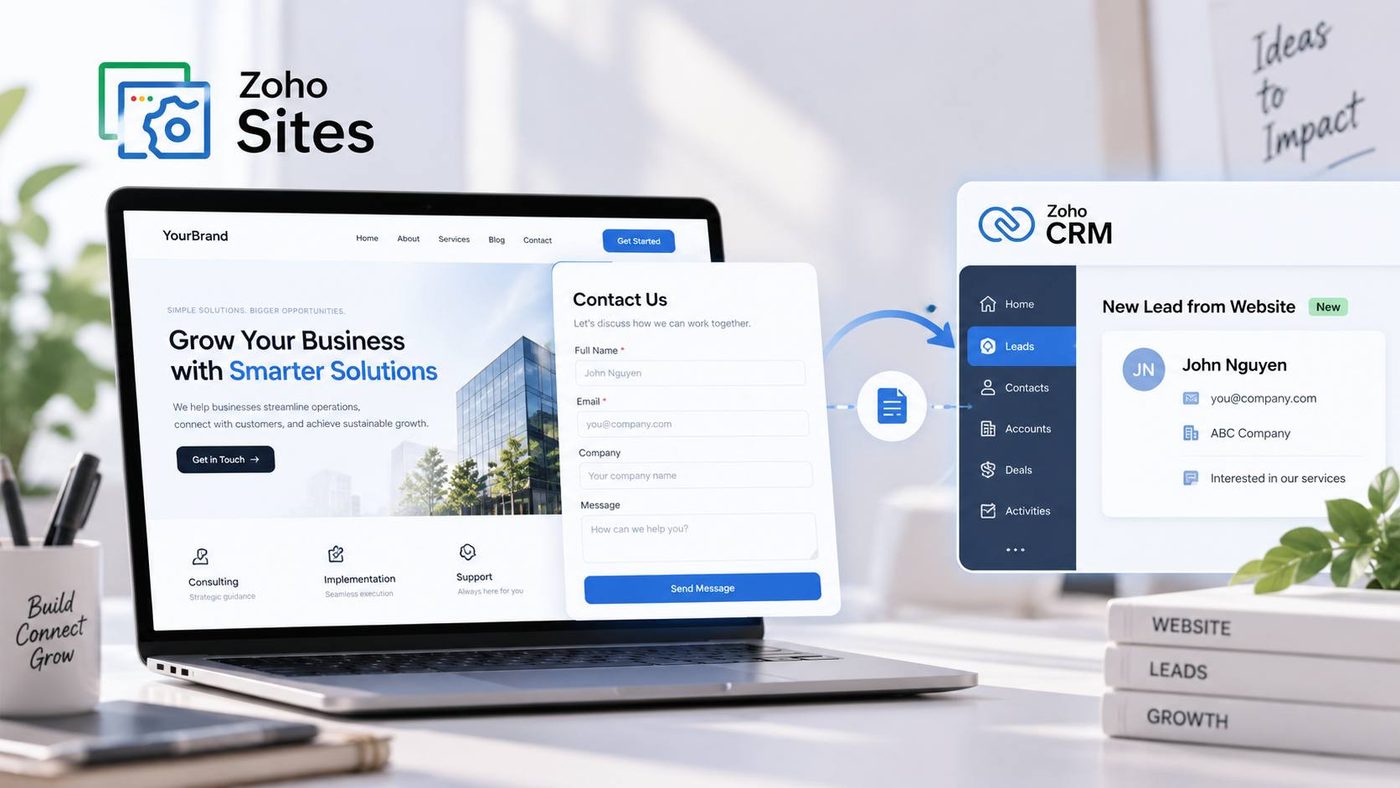
In addition, tools like Zoho SalesIQ support lead capture from websites, creating a direct connection between marketing and sales.
Zoho Applications in the Marketing Department
The Marketing department uses multiple tools within the Zoho ecosystem to manage campaigns and nurture customers.
Zoho Campaigns supports email marketing, Zoho Social helps manage social media channels, and Zoho Marketing Automation allows businesses to design automated customer journeys.
An important advantage is that marketing data is pushed directly into the CRM. This allows businesses not only to track the number of leads, but also to understand the quality of each source and the performance of each campaign. This makes Zoho software a powerful ally for any marketing team.
Zoho Applications in Customer Support
After a customer is converted, customer support becomes essential for retention and increasing customer lifetime value.
Zoho Desk is a ticket management tool that helps businesses handle customer requests in a structured way. Each request is recorded, categorized, and tracked until it is resolved.
When Zoho Desk is connected with Zoho CRM, the support team can view the full customer interaction history, enabling more effective and personalized responses.
Zoho Applications in Human Resources
The Human Resources department can use Zoho People to manage employee information, attendance, leave, and performance evaluation. Zoho Recruit supports the hiring process, from job posting and candidate screening to applicant management.
When HR processes are digitized, businesses can significantly reduce manual work and improve transparency in internal management.
Zoho Applications in Finance
Zoho provides Zoho software tools such as Zoho Books, Zoho Invoice, and Zoho Expense to support financial operations.
These tools help record revenue, manage expenses, and track cash flow. When integrated with CRM and sales systems, financial data is no longer isolated but becomes part of the overall business operation.
Zoho Applications in Internal Operations
Zoho Workplace is the platform that supports daily business activities, including email, chat, document storage, and online meetings.
When all internal activities are brought into one system, collaboration between departments becomes clearer and more efficient.
Zoho Applications in Analytics and Management
Zoho Analytics serves as the data analytics system, enabling businesses to build dashboards and generate real time reports.
From sales and marketing data to finance and operations, everything can be consolidated to support data driven decision making instead of relying on intuition.
The key point is not individual departments
A common mistake when looking at Zoho is to treat each tool as a separate software for each department.
In reality, the greatest value of Zoho lies in connecting departments together.
Marketing generates leads, sales converts them, customer support retains them, finance records revenue, and management tracks performance. When all of this data exists within one system, businesses can clearly see the full picture of their operations.
The WBL approach to Zoho software
At WBL, Zoho is not approached as a way to implement software for each department. Instead, it is viewed as a platform to redesign the entire operating system.
The process starts with understanding how the business currently operates, identifying bottlenecks between departments, and then redesigning data flows and processes. Once the system becomes clear, Zoho is then introduced for implementation.
This ensures that technology is not just used, but actually creates value in operations.
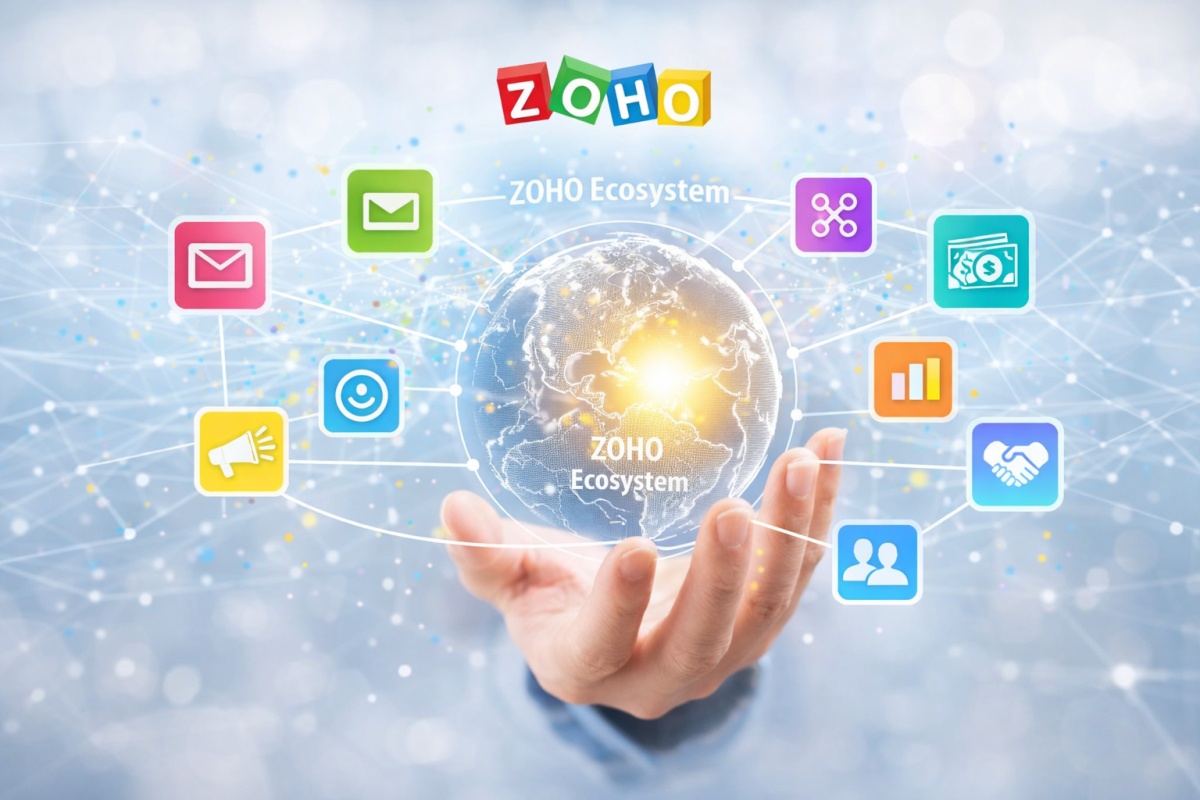
Zoho software is not limited to a single department, but can be applied across the entire business, from sales and marketing to customer support, human resources, and finance.
However, what matters is not how many tools are used, but whether those tools are connected into a unified system.
If a business is facing challenges in cross department collaboration or dealing with fragmented data, then reviewing the entire operating system is a necessary step before choosing any software.
And that is exactly how WBL approaches digital transformation with Zoho software. Not starting from tools, but starting from the system, then selecting the right platform for implementation and long term growth.