





Zoho Bigin vs Zoho CRM is not simply a matter of choosing the software with more features. The two platforms are built for different levels of management, so the right choice depends on the business size, Sales process and level of Data complexity the business is managing.

Zoho Bigin vs Zoho CRM: The Difference Starts with How Businesses Manage Data
When a business moves from Excel to CRM, the first question is often which platform to use. However, if the decision is based only on a list of features, a business can easily choose a system that is larger than its actual needs or, conversely, choose a tool and quickly realize that it no longer supports the way the business operates.
Zoho Bigin was built by Zoho as a Pipeline focused CRM, designed for small businesses and teams that need a simple and accessible way to manage customers. Meanwhile, Zoho CRM is a more comprehensive customer relationship management platform, designed for businesses that need to manage complex processes, deeper customization and expand their system as the business grows.
This creates a different way of looking at the two products. Instead of asking “Is Bigin or CRM better?”, businesses should ask “Where am I currently on the Data management scale?”
If the primary need is to centralize customer information, manage Sales opportunities and track the Pipeline, Bigin can address these needs quite directly. When a business begins to need more processes, multiple departments working with the same Data and greater customization capabilities, Zoho CRM becomes a choice that better fits that level of management.
Zoho Bigin: When a Business Needs to Bring Data into a Simple System

One of the common problems in small businesses is that customer Data is still stored in Excel, Email or separate tools. What is needed at this stage is not an overly complex system, but a clear enough place to centralize information and manage the Sales process.
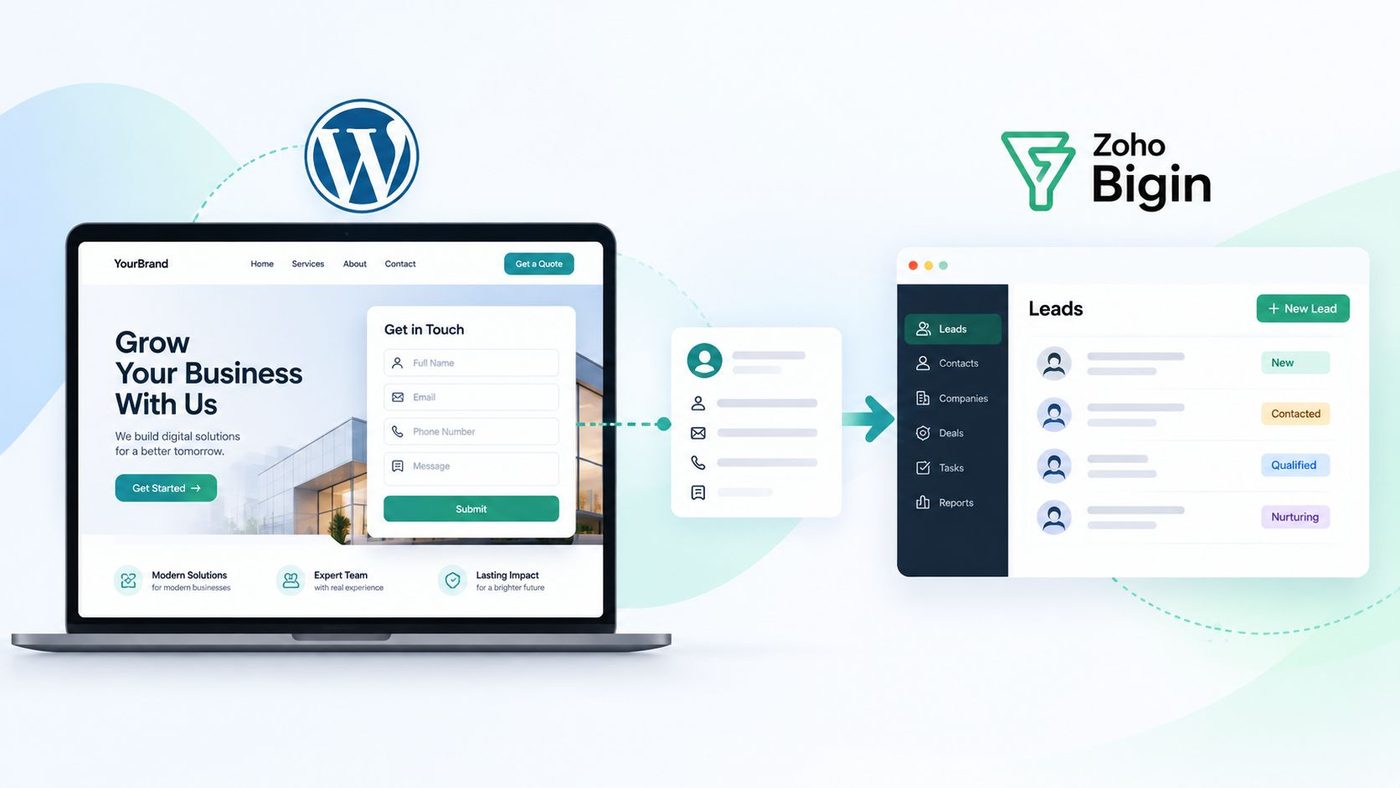
Bigin is designed around this approach. The platform focuses on Pipeline management, allowing businesses to create multiple Pipelines for different activities, manage contact information, track opportunities and carry out customer related tasks within the same environment.
The strength of this approach lies in its simplicity. Sales can see which stage each opportunity is in, who is responsible and what needs to be done next. Businesses can also set up automation for repetitive tasks such as sending Emails, creating tasks or updating records.
Therefore, Bigin is suitable for the stage where a business is building its Data management foundation and standardizing its Sales process. This is an important step from simply storing Data to beginning to use Data in business operations.
Zoho CRM: When Data Begins to Need a Deeper Management Structure
As a business grows, the challenge is often no longer limited to managing Leads and Sales opportunities. Data begins to relate to multiple processes, multiple teams and different requirements.
This is where Zoho CRM creates a difference.
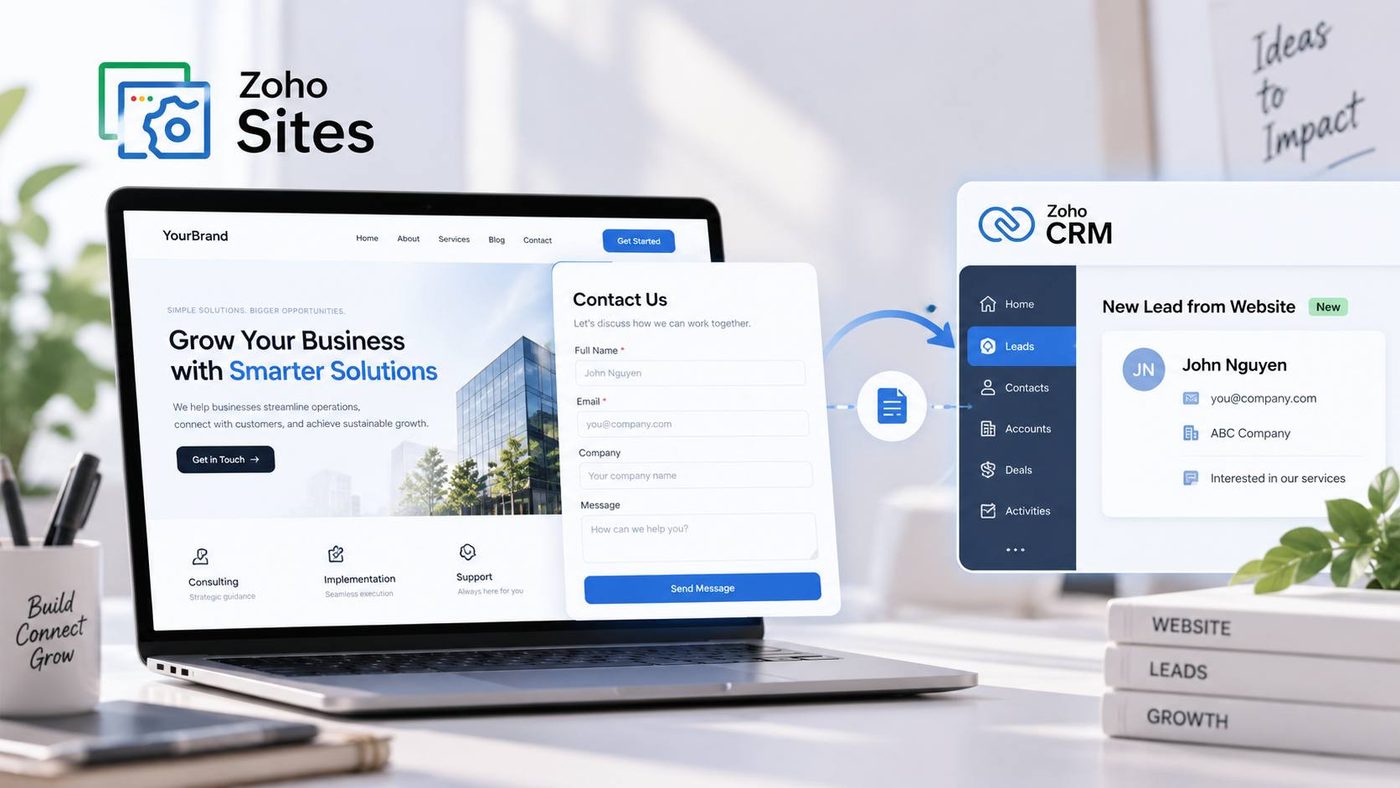
Zoho CRM allows businesses to customize their Data structure, information fields and system organization based on actual processes. The platform also provides process management tools such as Blueprint, automation, reporting and Data analysis.
This is particularly important when a business not only wants to know how many customers it has, but also needs to analyze Sales effectiveness, performance at each stage, team activities and the trends emerging from its Data.
Zoho CRM also provides the ability to build customized reports and analytical dashboards based on the metrics that matter to the business. Data therefore does not only serve Sales, but can become a foundation for multiple departments to work from the same unified source of information.
If Bigin helps a business start managing Data systematically, Zoho CRM is designed to build a Data management system that can scale with the organization.

Where Is Your Business on the Data Management Scale?
Instead of dividing businesses into “small businesses use Bigin, large businesses use CRM”, a more practical approach is to assess the complexity of Data management activities.
At the initial stage, a business primarily needs to centralize customer information, manage the Pipeline and replace Excel files that are becoming increasingly difficult to control. At this point, Bigin can be a suitable starting point.
At the growth stage, a business begins to have multiple Pipelines, multiple customer care processes and multiple employees working with Data. The need for automation and process control also increases. This is when the business needs to consider whether its current Bigin setup still meets its needs or whether requirements have emerged that go beyond the original scope of operations.
At the advanced management stage, Data becomes part of multiple activities across the business. The system needs to be customized according to processes, connect different departments, build in depth reports and support more complex management requirements. At this point, Zoho CRM can support a broader scope.
One important point is that businesses do not necessarily need to choose the largest system from the beginning. Zoho also supports upgrading from Bigin to Zoho CRM as needs develop. According to Zoho documentation, data such as users, companies, contacts, Pipelines, stages, tasks, events, notes, attachments and certain custom fields can be migrated to CRM during the upgrade process.
Do Not Choose a CRM Based on the Number of Features
A system having more features does not necessarily mean that it is more suitable.
If a Sales team only needs to manage customers and Pipelines but has to work on an overly complex system, the problem can shift from a lack of tools to difficulty using the tools. Conversely, if a business already has multiple processes but uses a system that is too simple, Data can quickly outgrow the existing structure.
Therefore, the choice between Zoho Bigin and Zoho CRM should begin with three questions:
- At what level is the business currently managing Data?
- Is the current Sales process simple, or does it already involve multiple steps and multiple teams?
- What additional management requirements will the system need to address in the future?
These three questions are more important than comparing a long list of features. The ultimate goal is not to own more tools, but to build a system that is sufficient for the team to use effectively and capable enough to grow with the business.
Zoho Bigin vs Zoho CRM should therefore be viewed as two points on the same Data management journey. Bigin can be the starting point when a business needs to move away from Excel and bring its Sales activities into a clearer system. Zoho CRM can become the next step when processes, Data and management needs have developed to a level that requires a deeper and more flexible platform.
For WBLGroup, choosing a CRM does not start with the question of which system the business can purchase, but with the question of what level of Data management the business actually needs. When the right starting point is identified, technology can support the development process instead of becoming another system that the team has to struggle to adapt to.