





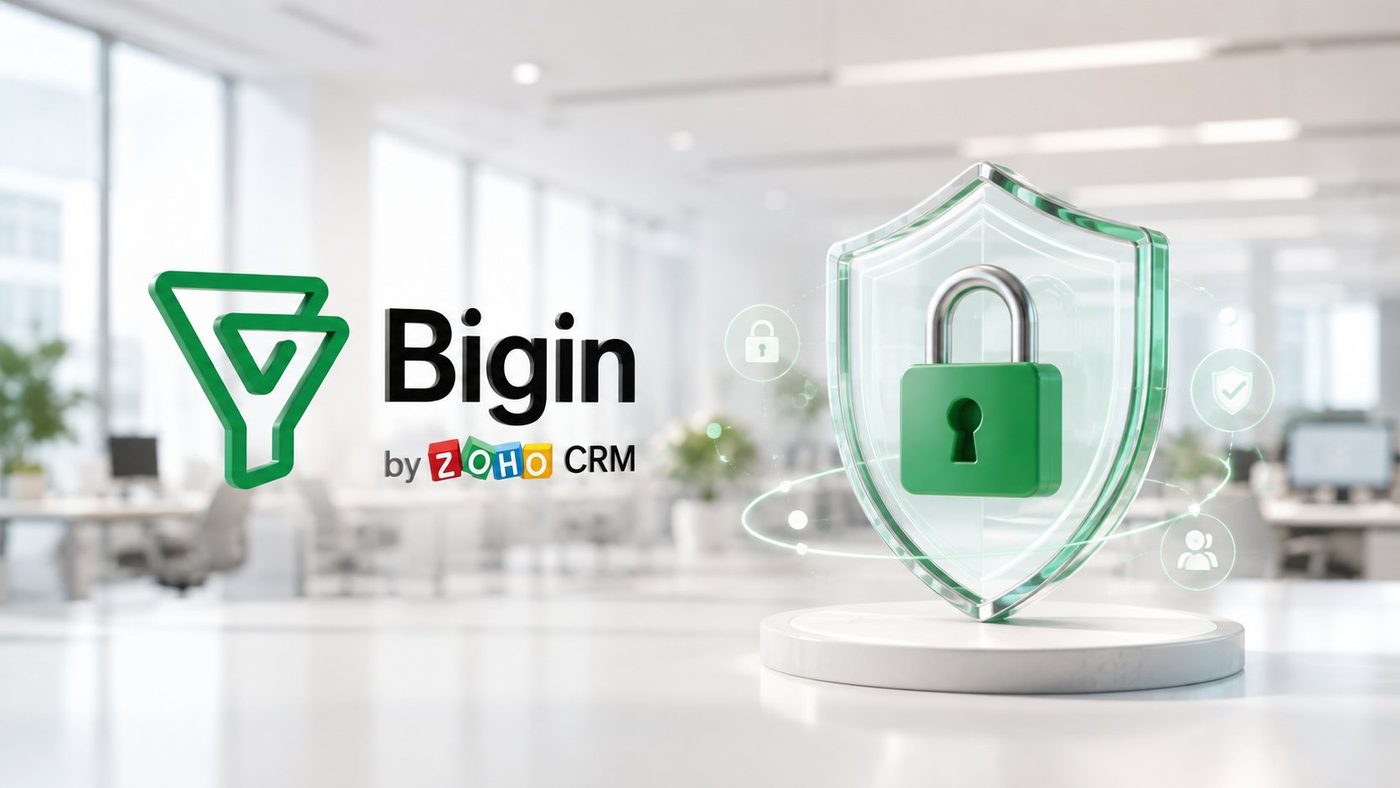
Zoho Bigin security is one of the common concerns when businesses move from Excel to CRM. One of the questions they often ask is: “Is customer data stored in Zoho Bigin safe?”
This is a completely understandable question. A CRM system can contain a large amount of important information such as customer names, phone numbers, email addresses, interaction history, business information and sales opportunities. If this data is accessed or used improperly, the risk is not limited to information loss but can also directly affect business operations.
Therefore, when evaluating a CRM, businesses should not only look at whether the software offers many features. More importantly, they need to understand how the data is protected, who has access to it and how much control the business has over its data
Is Zoho Bigin Safe?
According to information published by Zoho, Bigin is built within the Zoho ecosystem with multiple layers of security designed to protect business data, including data encryption, access control, activity monitoring, backups and privacy protection mechanisms.
Zoho also publishes security standards and certifications such as ISO 27001, ISO 27017, ISO 27018 and SOC 2 Type II, along with policies and tools that support the protection of personal data under requirements such as GDPR.
This means Bigin is not simply a tool for storing a list of customers. Data is managed within a system with multiple layers of control, from infrastructure to user permissions.
But to better understand how this protection works, let’s look at each layer.
1. Data Is Encrypted in Transit and at Rest
When employees use Bigin, data is continuously transmitted between users’ devices and the system. Zoho uses TLS (Transport Layer Security) to protect data during transmission.
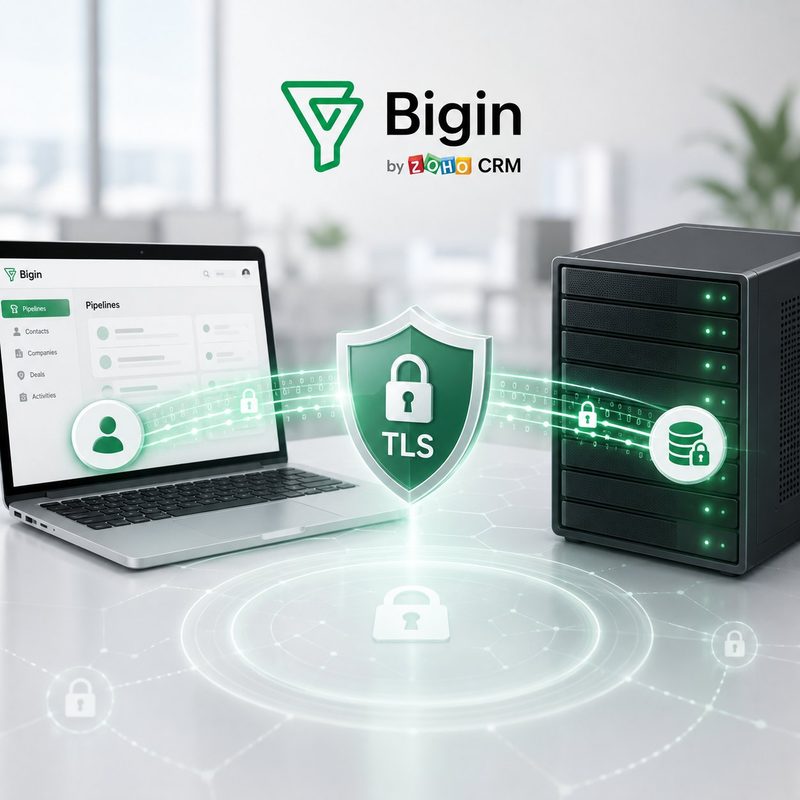
For stored data, Zoho states that it uses 256-bit AES encryption. Simply put, data is protected both while it is being transmitted through the system and while it is being stored.
This is particularly important when businesses migrate data from Excel or an existing system to a CRM. Customer data not only needs to be imported correctly but also protected throughout its use and storage.
2. Businesses Can Control Who Has Access to Data
Not every employee needs to see all customer data.
For example, a Sales representative may only need to manage the opportunities they are responsible for, while a Sales Manager needs to monitor the entire team’s Pipeline. If all users have the same level of access, it becomes difficult for businesses to control data as the organization grows.
Bigin supports user and access management mechanisms, allowing businesses to configure permissions based on each employee’s role.
This establishes an important principle when implementing a CRM: give employees the access they need, rather than opening all data to everyone.
3. Activity History Can Be Monitored Within the System
A common problem with managing data in Excel is that it is difficult to know who changed information and when the change was made.
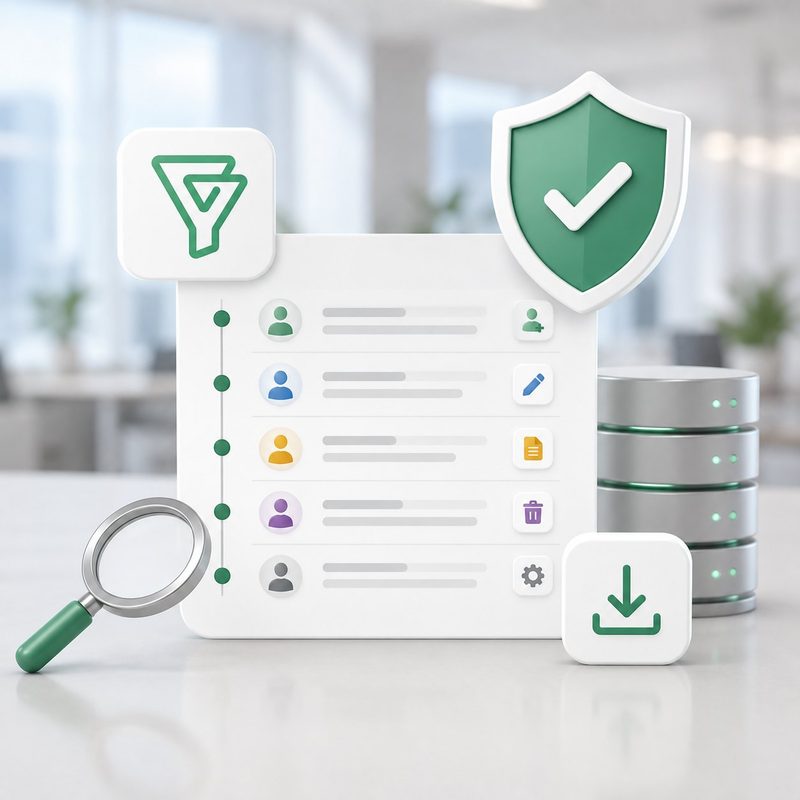
Bigin provides an Audit Log, allowing administrators to monitor activities performed within the account. The log can be filtered by user, activity type or time period and exported when needed for review.
For example, if customer information is changed or a particular system activity needs to be investigated, administrators have additional data to trace the history instead of only seeing the final result.
For businesses with multiple employees working on the same database, this is a highly useful layer of control.
4. Data Backup and Recovery Tools Are Available
Security is not only about preventing unauthorized access to data. Businesses also need to prepare for situations where data is accidentally deleted or an incorrect action is taken.
Bigin provides Data Backup, allowing administrators to create a backup of account data. In addition, the system includes a Recycle Bin for managing deleted records and Import History for tracking data import activities.
These features are particularly useful when businesses are implementing a CRM and regularly performing activities such as importing legacy data, updating information or cleaning their database.
Instead of relying entirely on a single Excel file, businesses have additional data management tools directly within the system.
5. Zoho Has International Security Standards
This is an area businesses often consider when evaluating a CRM platform.
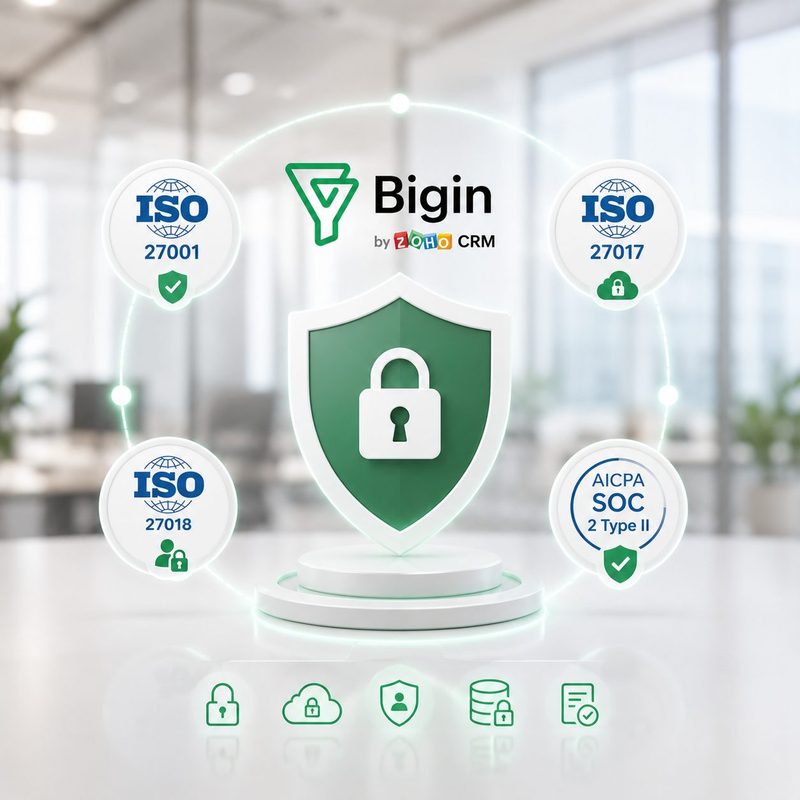
Zoho states that it complies with multiple standards related to security and data protection, including ISO 27001 for information security management, ISO 27017 for security in cloud environments, ISO 27018 for the protection of personal data in the cloud and SOC 2 Type II, which relates to controls for security, availability, processing integrity, confidentiality and privacy.
For businesses, these standards provide an important basis for evaluating the maturity of the security systems built by the provider.
However, it is important to understand that Zoho having security certifications does not automatically mean that a business meets every legal requirement. Businesses remain responsible for how they collect, use, share and manage customer data.
Should Businesses Be Concerned About Putting Data Into Bigin?
Yes, but businesses should not continue using poorly controlled data management methods simply because they are concerned about the cloud.
Consider how a business currently manages its customers. Data may be spread across multiple Excel files, each Sales representative may maintain a separate list, interaction information may be stored in email or messaging applications, and when an employee leaves, the business has to recover data from multiple places.
In this situation, the issue is not whether the data is stored in the cloud. The issue is whether the business actually has control over its data.
A centralized CRM brings customer data into a single system while providing tools for access control, activity monitoring and data management. This helps businesses reduce their dependence on files and personal accounts managed independently by Sales representatives.
But Software Cannot Secure Data on Behalf of the Business
This is an important point.
Zoho can provide the infrastructure and security tools, but businesses are still responsible for how those tools are used.
If employees share accounts, share passwords, grant overly broad permissions or fail to revoke access when employees leave, risks can still occur even when the platform has strong security mechanisms.
Therefore, when implementing Bigin, businesses should establish basic principles from the beginning: one account per user, role-based access, appropriate authentication, regular access reviews and access revocation when an employee is no longer with the organization.
This is also why CRM implementation should not stop at “installing the software.” Businesses need to design how data will be managed within the system as well.
Is Zoho Bigin Safe?
Zoho Bigin is built with multiple layers of security for business data, including data encryption, access control, Audit Logs, backups and international security standards published by Zoho. These mechanisms provide a foundation for businesses to manage customer data in a more centralized and controlled environment instead of distributing it across multiple files and personal accounts.
However, security does not depend on software alone. Businesses still need to proactively configure access permissions, manage user accounts, determine what data should be stored and regularly review how the system is being used. A platform with strong security mechanisms delivers the most value when combined with a clear data management process.
At WBL Group, this is also an area that needs to be considered from the CRM implementation stage. In addition to setting up the Pipeline and migrating data to Zoho Bigin, businesses need to determine who can access which data, how data should be managed and how the system should be configured to fit the actual operating model.
Because moving from Excel to a CRM is not simply about transferring data to new software. It is an opportunity for businesses to rebuild the way they manage customer data in a way that is more centralized, more transparent and easier to control.