


Enterprise CRM and ERP address two different growth challenges: one system helps businesses develop customer relationships, while the other connects and optimizes internal operations. So, should a business prioritize market expansion or strengthen its internal resources first? The answer depends on the bottleneck holding back its growth.

If a business has good products but struggles to find customers, track Sales opportunities or maintain relationships with existing customers, CRM may be the right priority. Conversely, if order volumes are increasing but processing is slow, data is inconsistent across departments and operating costs continue to rise, ERP may be the platform that needs attention first.
Rather than choosing based on technology trends, businesses need to identify the problems directly affecting business performance and build an implementation roadmap accordingly.
Enterprise CRM and ERP Address Two Different Challenges
Enterprise CRM focuses on managing customer information and supporting Sales, Marketing and customer service activities. It helps businesses centralize customer data, track interaction histories, manage business opportunities and monitor the Sales Pipeline. As a result, teams can better understand customer needs, avoid missing opportunities and deliver consistent customer care.
ERP, meanwhile, focuses on connecting operational processes such as Sales, Purchasing, Inventory Management, Accounting and Manufacturing. Instead of allowing each department to manage its own separate data, ERP enables information to be updated and used across departments. This helps businesses control resources, reduce manual work and improve visibility into business operations.
Simply put, Enterprise CRM helps businesses develop and maintain customer-generated revenue, while ERP helps them manage the resources needed to fulfill business commitments effectively. The two systems serve different objectives but are closely connected: customer growth is unlikely to deliver sustainable results if operations cannot keep up, while optimized operations alone may not drive growth if a business lacks customers and Sales opportunities.
When Should Enterprise CRM Be Prioritized to Expand the Market?

Enterprise CRM should be prioritized when the main bottleneck lies in customer acquisition, conversion and retention. Common signs include customer data scattered across multiple spreadsheets or tools, employees struggling to track interaction histories, missed Sales opportunities and the absence of a consistent customer care process.
Without a centralized management system, each employee may store information differently. If an employee leaves or a customer is transferred to another account manager, interaction histories and ongoing processes can easily be disrupted. Managers may also struggle to determine which stage a customer is at, why a Sales opportunity has not converted and which Marketing activities are actually delivering results.
An Enterprise CRM system helps standardize customer management, from the initial contact through to a transaction and ongoing post-sales support. Centralized data allows teams to track business opportunities, schedule reminders, manage customer interactions and analyze Sales performance. On this basis, businesses can improve conversion rates, enhance service quality and increase opportunities to generate revenue from existing customers.
However, implementing Enterprise CRM does not mean the market will automatically expand. The system only delivers value when businesses clearly define their target customer segments, establish appropriate Sales processes and have a plan for using data to improve business decisions. If the underlying issues involve product quality, market positioning or Marketing strategy, those issues still need to be addressed alongside CRM implementation.
When Should ERP Be Prioritized to Optimize Internal Resources?
ERP should be prioritized when businesses begin to struggle with operational control. This situation often emerges as order volumes increase, transaction numbers grow or the business expands into additional departments, branches and business activities.
For example, the Sales department may have confirmed an order, but Accounting still needs to recheck the payment information, the Warehouse may not know how much stock needs to be prepared, or Inventory reports may not match actual stock levels. Tasks that seem straightforward can generate repeated communication, duplicate data entry and manual checks. When data is not updated consistently across departments, managers also spend more time compiling reports before making decisions.
ERP connects these business processes on a shared platform, creating a continuous flow of information from order receipt and Inventory checks to payment processing and Accounting entries. By reducing duplicate data entry and discrepancies between departments, businesses can improve processing speed, control costs and use resources more effectively.
Nevertheless, ERP does not automatically resolve every operational problem. If existing processes overlap, responsibilities between departments are unclear or input data is inaccurate, transferring those processes into software may allow the same issues to persist. Therefore, businesses need to review and standardize their processes before implementation, while clearly defining the improvements they expect to achieve in order to evaluate the return on investment.
Which System Should Be Implemented First to Drive Growth?
There is no fixed implementation sequence that suits every business. The decision should begin with identifying the bottleneck that has the greatest impact on revenue, costs and operational capacity.
If a business has stable supply capabilities but does not manage customer data effectively, frequently misses Sales opportunities or lacks the information needed to track its Sales team’s performance, Enterprise CRM should be considered first. In this situation, improving customer management can help the business make better use of its Sales resources and grow revenue.

Conversely, if a business already has a stable customer base and order volume but frequently experiences Inventory discrepancies, order processing delays, difficulties controlling costs or time-consuming report consolidation, ERP may be the priority. Strengthening operational capabilities will help the business meet current demand and prepare more effectively for its next stage of expansion.
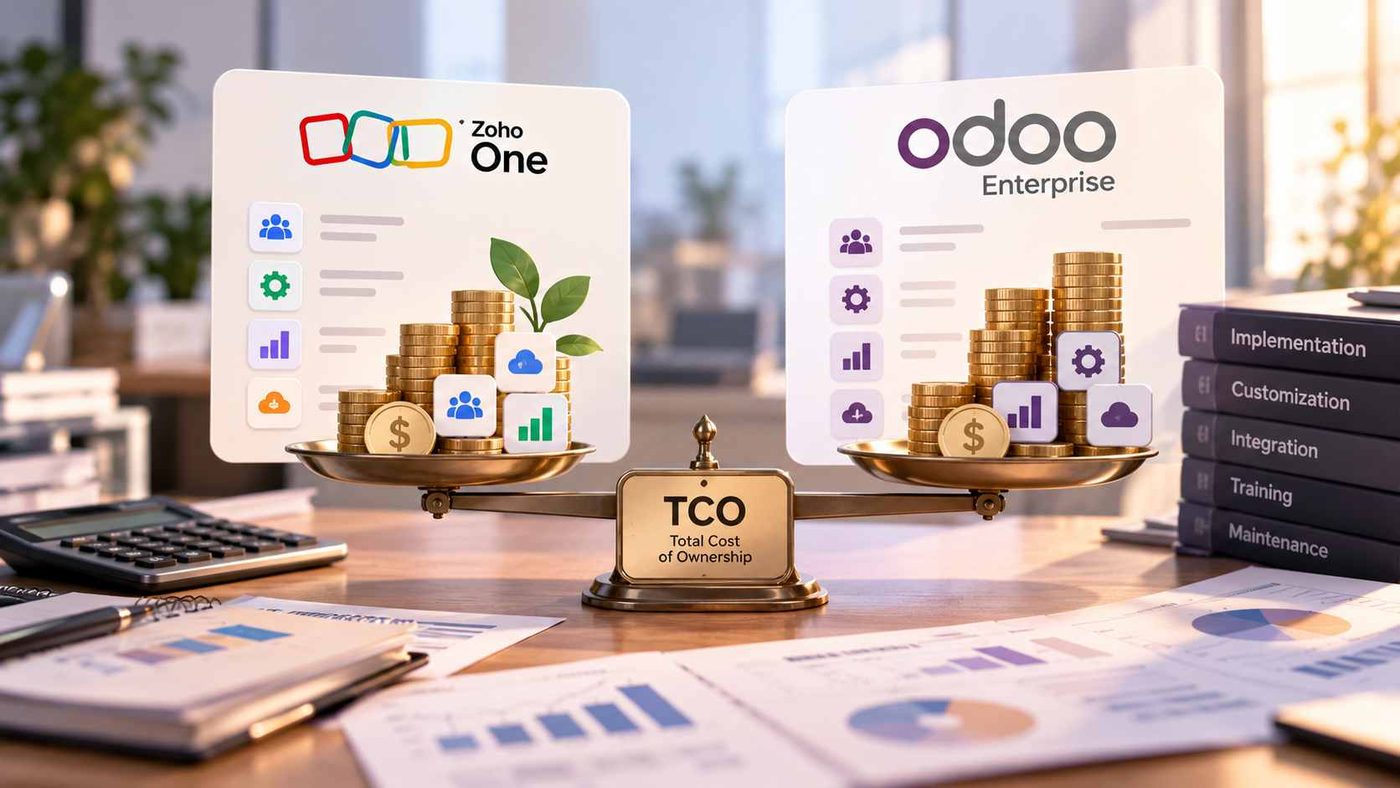
For businesses facing both types of challenges at the same time, implementing Enterprise CRM and ERP in stages is often worth considering. The business can start with the system that addresses its most urgent bottleneck, then expand once processes and resources are ready. During planning, it should assess total investment costs, employees’ capacity to adopt the system, data readiness and integration requirements between systems.
The important thing is not to implement as many software solutions as possible, but to ensure that every technology investment is tied to a specific business objective and has clear criteria for measuring its effectiveness.
Connecting Enterprise CRM and ERP to Build a Foundation for Sustainable Growth
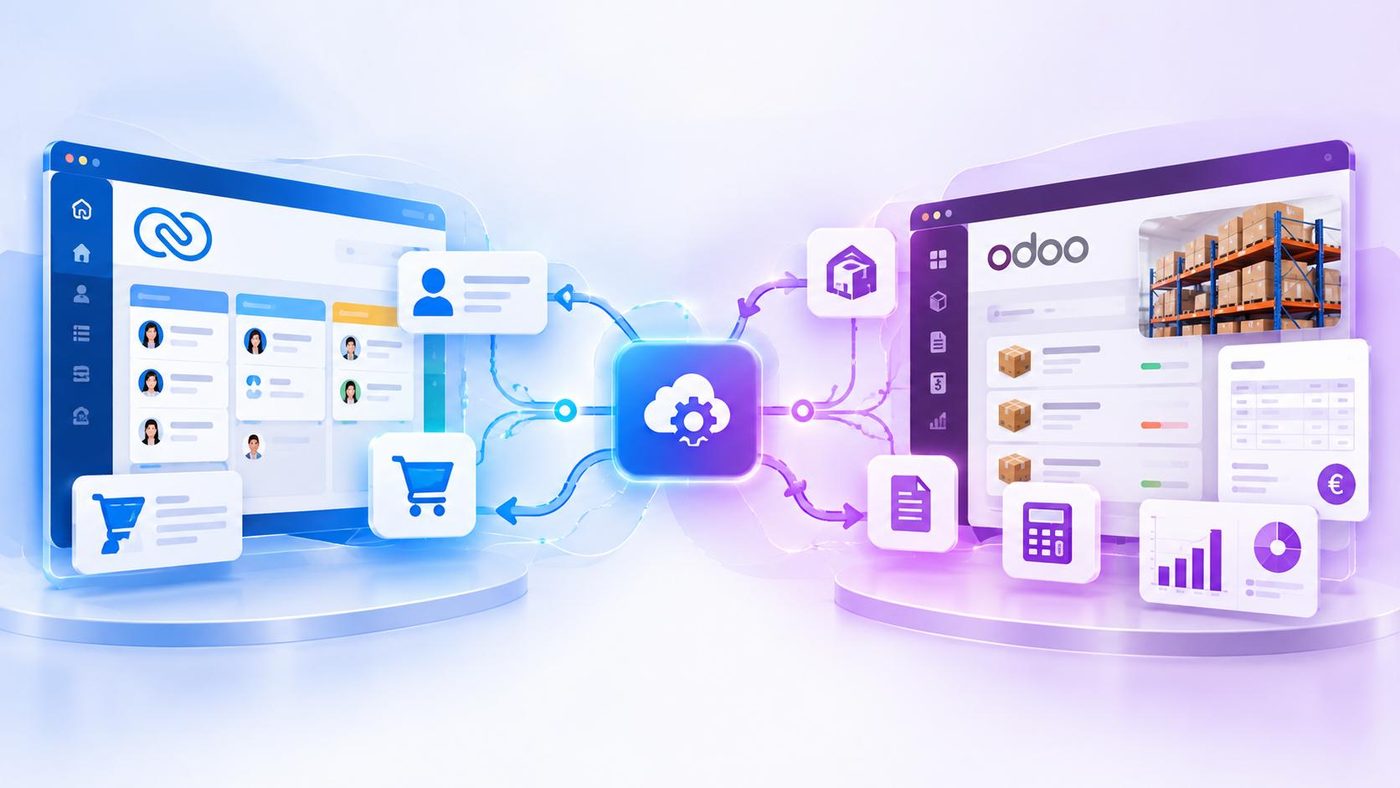
As business operations expand, CRM and ERP can complement each other to create an end-to-end management process. CRM records customer needs, interaction histories and Sales opportunities. Once a transaction is confirmed, the necessary information can be transferred to ERP to support order processing, Inventory checks, payment management and revenue recording in line with the business’s processes.
This integration helps prevent individual departments from maintaining separate datasets while improving coordination between Sales and Operations. The Sales team can access the information needed to communicate with customers, while the teams responsible for orders, Inventory and Accounting can process their work more consistently. Managers can also combine customer data with operational data to gain a more comprehensive view of business performance.
However, businesses do not need to integrate every system from the outset. They should first identify which data needs to be shared, which system will serve as the primary source of truth and which processes require automated connections. The appropriate roadmap will depend on business size, process complexity, budget and the capabilities of internal teams.
Enterprise CRM and ERP are not opposing choices between customers and operations. They are two platforms that can support each other, provided businesses establish the right priorities and implement them according to actual needs. WBLGroup works with businesses to assess processes, identify bottlenecks and develop a CRM and ERP roadmap aligned with business objectives, operational capabilities and investment resources.